Exclusive- Hassan Hattab to Echorouk: “there is no Al-Qaeda in Algeriaâ€

الشروق أونلاين
-
-
3160
-
0
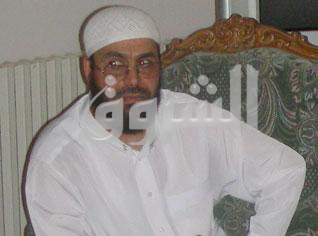
Hassan Hattab
Former leader of the Salafist Group for Preaching and combat (GSPC) Hassan Hattab called on armed people to give up their acts and join society.
-
Since the GSPC affiliated to Al-Qaeda in 2006, the armed groups started again their attacks and drew the media attention. Is this affiliation a real one?
-
When I was on the head of the GSPC, I rejected this affiliation. We warned the government against the GSPC’s attempts to join al-Qaeda.
-
Does the so-called Al-Qaeda in the Islamic Maghreb really exist?
-
The affiliation of the GSPC to Al-Qaeda is formal only. Al-Qaeda has nothing to do with the GSPC as there is no direct coordination between them nor does Al-Qaeda give instructions to the GSPC.
-
The announcement of the affiliation came to keep the soldiers loyal as they were confused and hesitating.
-
The issue of recruiting new members in the GSPC has emerged within the last few years. Why do some young people join the group now?
-
This new wave of recruitment is due to many aspects: we stopped fighting in 2003 and we kept negotiating until 2005. We offered to the regime a conception to end the crisis. The president of the republic called for the reconciliation and we accepted it. We followed his speeches on the reconciliation on TV on many occasions. We were careful because we were afraid that the regime will not keep its promises. We answered the call of the president and scholars as well as the people who voted on the Civil Concord in 1999. We held talks with the regime and gave it a list of requests. We asked for right to be given to the repentant terrorists. We also asked for prisoners release and bringing expelled people back.
-
Did visits paid by scholars and preachers to Algeria have a positive impact on the armed people. They launched their call through Echorouk rejecting killings and bombings?
-
I am sure that our brothers in mountains followed those visits. They read newspapers and listen to the radio. When scholars talked about what was happening in Algeria in 1999, they convinced us. We kept listening to their tapes until we decided to stop our acts in 2003. The presence of scholars and preachers has a great impact on the armed people because they are aware of their scientific position. That makes them deeply thinking of their acts.
-
Did the regime’s method change in dealing with you?
-
The regime used to attempt to eradicate us. Because of that, some mosques were closed and the policy of arbitrary arrests was adopted. Yet, many things changed when President Bouteflika arrived. We started feeling that the situation was getting better and there was a serious desire to get out of the crisis. We followed and studied President Bouteflika’s speeches. When we were sure he was sincere, we decided to support his policy to reach satisfactory results.
-
What is the reference of the GSPC and the scholars who have an impact on those people?
-
Most of those people are Salafist. They respect Saudi scholars and Abu Mohamed el Mokdessi. Some preachers in Algeria would have convinced people to give up armed acts if they were given the opportunity to do so. I think that the visits of scholars play a positive role in resolving the crisis and showing people the right way. Yet, I advise journalists to be flexible and wise when writing on those people.
-
Scholars talk in some issues in general. We ask them to go through the details such as saying repentant terrorists are not guilty. At that time, you will see them leaving the mountains in groups.
-
Did you endeavours to convince the armed people to stop their acts work?
-
Honesty, this job needs continuity and can not be done overnight. As I know my brothers in the mountains, I am sure results will be positive. Today, we are launching calls and holding meetings with scholars. That will achieve results in future.
-
Do you want to say something to the armed people in mountains?
-
I tell them or the people who want to join them their acts are illegal in Algeria. Scholars have already talked about that. Because of that, they are sinful if they stay there. The government opened the door of the reconciliation and allowed everyone to stop the armed acts. They should seize the opportunity and come back to their society. We are the biggest proof on that. We are dealing with the society and we are not hurt thanks Allah.
-
Do you have any message to the regime?
-
We ask the regime to speed up the settlement of our brothers’ situation as they stop their armed acts and joined the National Reconciliation endeavour. Socially speaking, they should speed up this process so that the hesitating people will be convinced and realise that the government is sincere.
-
-
Some armed people say they have been operating in the mountains for years and they have not got anything. “So, why should we stop our acts?”
-
-
We talked about this issue in 2005 and we were sincere. Yet, the regime was not serious in eradicating the crisis. That made us unassuming. We have recently come up with an initiative an adopted the cases of repentant terrorists. We submitted them to the government and we felt that the government is serious about that. Thanks Allah, there is cooperation in this regard.
-
-
Do visits paid by scholars and preachers help in overcoming the crisis and reinforce the National Reconciliation?
-
-
Those visits should continue. The government should support them because this endeavour does not achieve results overnight. It needs time. That makes soldiers following the scholars’ advices and calls to stop the armed acts.
-
Some armed people may not agree with us now but they respect us. When they see today that Hassan Hattab, the GSPC’s leader and other members support the Reconciliation, they start wondering: is it believable that all those leading members are wrong? We joined this endeavour to satisfy Allah and not for interests. These are religious convictions. There are some brothers who know me in the mountains and they know who I am. That will certainly have a big impact on our steps to restore peace and safety in Algeria.
-
-
How was the position of some members in the GSPC when you tries to convince them in the necessity of stopping their armed acts?
-
-
Some soldiers insulted me but I was kind to them and I showed them religious evidences. Some of them apologised to me and others sent mediators to me to forgive them for what they told me.